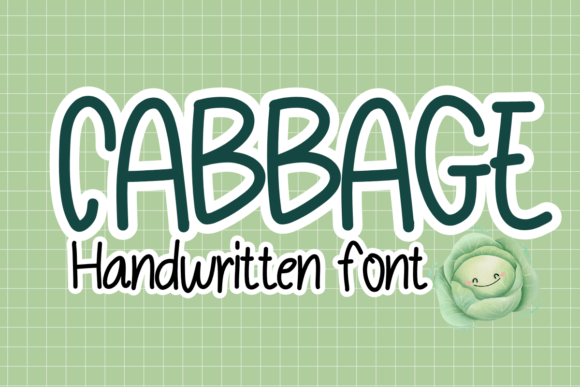
Cabbage: A Handwritten Font for Authentic Design
Imagine infusing your digital creations with the warmth and authenticity of a personal note. In a world saturated with sterile, uniform typography, the Cabbage font offers a charming, handwritten aesthetic that can instantly humanize your designs and forge a stronger connection with your audience.
Cabbage is more than just a cute handwritten typeface; it's a versatile creative asset. Its friendly, approachable character makes it perfect for projects that require a personal touch. While it excels in intimate applications like diary entries or greeting cards, its utility extends across the entire spectrum of graphic design. Think of it as a tool to soften a brand's voice, add whimsy to marketing materials, or create a sense of handcrafted authenticity in your visual communication.
Practical Applications Across Design Projects
The true value of a font like Cabbage is revealed in its application. Its organic lines and informal rhythm can be strategically deployed to achieve specific design goals. Here’s how it can enhance various creative projects:
- Branding & Logo Design: Use Cabbage for brand marks, taglines, or sub-brands that target a young, creative, or lifestyle-oriented audience. It conveys approachability and creativity, making it ideal for bakeries, boutiques, artisanal products, or personal blogs.
- Marketing & Social Media: Stand out in crowded feeds. Cabbage is perfect for Instagram quotes, Facebook posts, Pinterest graphics, and email headers. Its handwritten style stops the scroll, feels personal, and boosts engagement by breaking the monotony of standard sans-serifs.
- Web & UI Design: Apply it sparingly but effectively for section headers, pull quotes, or call-to-action buttons on landing pages. It adds visual interest and a human element to digital interfaces, improving the user experience by making content feel more relatable.
- Packaging & Merchandise: Elevate product packaging, labels, and merchandise. A handwritten font suggests care and craftsmanship, perfect for product names on coffee bags, candle labels, or apparel tags. It translates beautifully to print design for mugs, cards, and stationery.
- Editorial & Presentations: Break the monotony of long-form text. Use Cabbage for chapter titles in a book layout, keynote slide headers, or magazine pull quotes to create dynamic visual hierarchy and guide the reader's eye.
Integrating a Handwritten Font into Your Design Workflow
Successfully incorporating a typeface like Cabbage requires thoughtful execution to maintain professionalism and clarity. Consider these factors:
Readability & Scalability: Always test the font at various sizes. While charming, handwritten fonts can lose legibility at very small sizes or on low-resolution screens. Use it for larger headings or short bursts of text rather than body copy.
Visual Hierarchy & Pairing: Cabbage creates a strong focal point. Pair it with a clean, neutral sans-serif or serif font for body text to ensure readability and establish a clear hierarchy. The contrast between the organic headline and the structured body text creates a balanced and modern aesthetic.
Brand Consistency & Audience: Ensure the font's personality aligns with your brand identity and target audience. A playful handwritten font may not suit a corporate law firm but is perfect for a children's education app. Consistency in its use is key to building a recognizable brand system.
Choosing the right creative assets is a fundamental part of the design process. A font like Cabbage provides a specific tool for evoking emotion and authenticity. By understanding its strengths and applying it with intention, you can transform standard designs into compelling visual stories that resonate on a human level, ultimately strengthening your message and your brand's visual impact.